Vasectomy information for the men of British Columbia's Interior
No-needle No-scalpel Vasectomy
How it is done
The No-Needle, No-Scalpel Vasectomy is a minimally invasive, office-based procedure. It differs from the traditional vasectomy, where a larger incision was made on each side of the scrotum.
Your vasectomy will be performed in the office under local anesthetic (“freezing”).
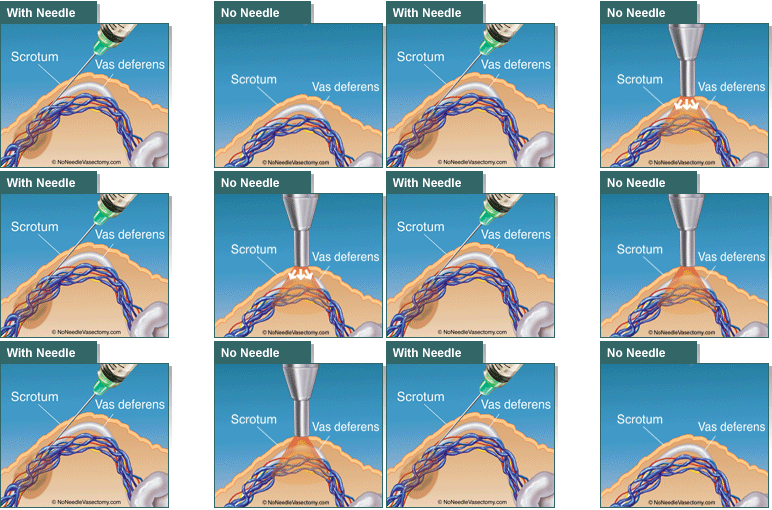
Instead of using a needle-syringe injection, as is common at the dentist, we use the Madajet device to administer the local anesthetic. This device uses a high-pressure spray to deliver the anesthetic medication through the skin and around the vas deferens, without the use of a needle. In the process, both the skin and the tubes are anesthetized.
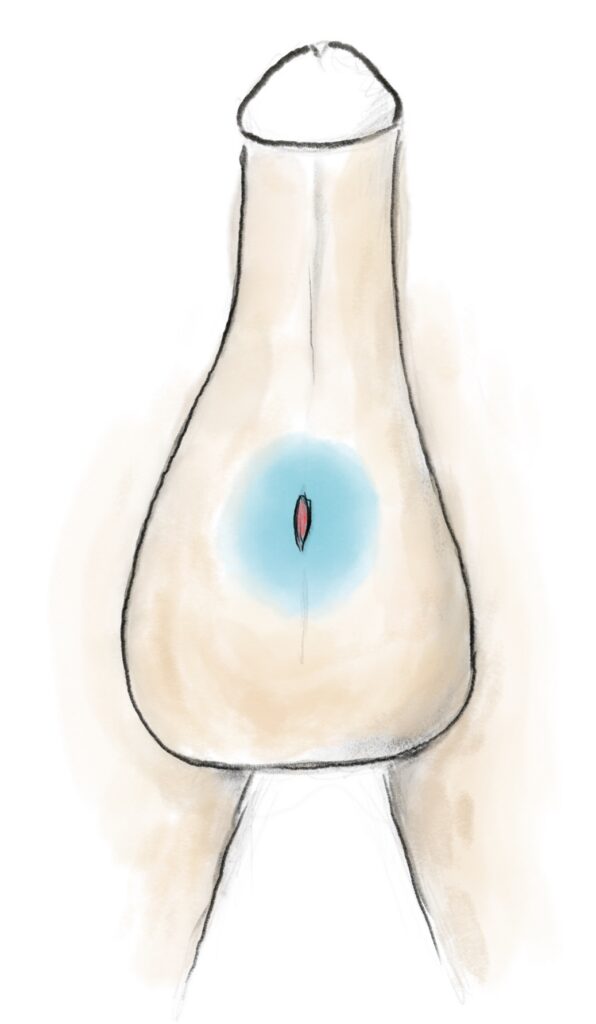
The best way to describe the sensation is that it feels like a quick flick of a finger on the scrotum. There will be a total of six “flicks”—three on each side—placed close together. The first flick may feel the most surprising, but once the anesthetic begins to work, the remaining ones are usually well tolerated. This numbs an area about the size of a toonie. It is not necessary to freeze the entire genital area.
After the area is anesthetized, you may still feel touch, pulling, tugging, pressure, or movement, but you should not feel any sharp pain.
Instead of making a cut with a scalpel, I use a specialized vasectomy instrument to create a tiny buttonhole opening in the skin. This opening is only about 3–4 mm in size. Only a single opening is required, located in the midline of the scrotum, approximately 2–3 cm below the base of the penis.
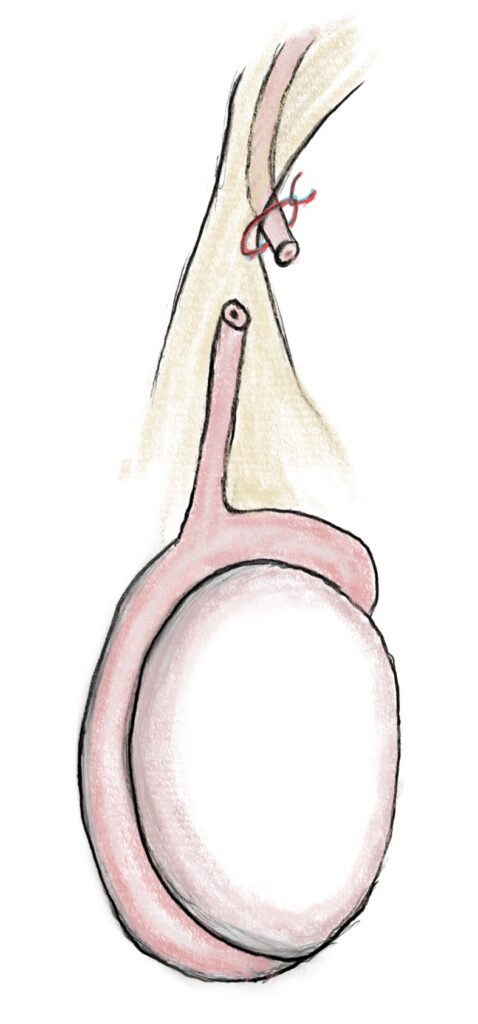
Through this opening, I bring out one tube, clear away the surrounding fascia layers, and remove a small section of the tube (about 1 cm). The lumens (the insides) of the remaining tube ends are then cauterized with a heat cautery. The proximal end (closer to the body) is sealed with a suture, creating a fascial interposition (a tissue layer) between the two ends. The distal end (closer to the testes) is left open to reduce the risk of vas deferens congestion.
Both tubes are treated through the single skin opening. Because the opening is so small, the surrounding muscles contract and seal it naturally. Therefore, no sutures are required to close the skin. A Band-Aid is applied, which should remain in place for 24 hours.
The average patient spends about 30–40 minutes in the office from start to finish. I schedule one hour for each appointment, as some patients may require additional time for various reasons.